
In search of creative freedom
Filmmakers from Cuba to Iran reflect on creative freedom and stretching the documentary form
As regimes tighten their grip on personal and collective freedoms, documentary remains a vital craft that persists, continually taking on new forms. Stretching the bounds of documentary, filmmakers Miguel Coyula, Firouzeh Khosrovani, Viv Li, and Audrius Stonys bear witness to lived realities around the world, from Cuba to Iran, China, and Lithuania. Weaving together their diverse artistic practices and reflections, we explore how these film practitioners approach storytelling, negotiating their creative freedom across different political, production, and economic contexts.
Cuban filmmaker Miguel Coyula—whose Chronicles of the Absurd (2024) screened at IDFA 2024 and won the IDFA Award for Best Film as part of Envision Competition—has long been drawn to hybridity as a fertile space for filmic probes. Fiction and genre filmmaking, including sci-fi, have provided him with a repertoire of tools that help him explore and “magnify the mental projections of dysfunction beyond realism.”
Miguel Coyula“Making films completely outside the system, guerrilla-style, and without institutional funding may be the only way to explore the tabooed subjects openly.”
However, his creative approach to form has also developed out of necessity amid Cuban political reality, which confines artistic freedom to that permitted by the Cuban Revolution’s policies. Recent legislation, such as Decree-Law 373, has pushed independent filmmaking, which had been in legal limbo before 2019, further to the margins, Coyula explains, and the artists working outside state-sanctioned frameworks are now branded as “infringers of the law.” Such developments cemented his desire to create in inventive ways “completely outside the system, guerrilla-style, and without institutional funding,” which he reckons might be “the only way to explore the tabooed subjects openly.”
In this vein, his latest documentary Chronicles of the Absurd continues his practice of unsettling the cinematic form. Within what Coyula describes as an “ugly film for its relentless bombardment of nastiness,” revealing the inner workings of Cuba’s censorship, absence and presence turn into formal elements. Here, avatars serve as stand-ins for visually absent characters like Cuban state security agents. “Antonia Eiriz’s monstrous abstractions, herself a censored artist in the 1960s,” are thus set against the screen’s black void (“verbal silence”) and the verbal excess, captured by the artists on concealed cell phones.
Firouzeh Khosrovani“Through voice and stylized shots of a migratory bird, Khosrovani "extends a woman’s intimate experience of exile to others far outside the frame".”
For many Iranian filmmakers, politics is not a category of choice, some have argued. Iranian director Firouzeh Khosrovani agrees, recognizing it as an inevitable part of discussion. Engaging with political themes in her films subtly, she often makes meticulous formal choices that elevate their “constructedness” in pursuit of what she calls “deeper truth.” In this willingness to “interfere with reality” in such a manner, she echoes the approach of Iranian auteur Abbas Kiarostami, whether through designing spaces, fictionalizing dialogues rooted in reality, or displacing narration and lending one’s voice to others.
The filmmaker notes that in a climate of strict permits and intense scrutiny of filming, she often utliizies domestic spaces, which emerge as a viable logistical and production option that offers a controllable mise‑en‑scène. However, rather than treating them merely as zones of safety or interior freedom, she mobilizes them as active storytelling devices.
In Radiograph of a Family (2020), screened at IDFA 2020, a house and its altering decor are carefully constructed to reflect the entry of Islamic laws and state directives into her family’s domestic life, eventually breaking it in two. This split—spatial, temporal, and bodily, which is also explored in several of her other works—in this documentary forms a “dichotomy that lives under the same roof, with [her] secular father and devout Muslim mother acting as two poles of Iranian society.”
In Past Future Continuous (2025), co-helmed with Morteza Ahmadvand and screened at IDFA 2025, Khosrovani also reimagines a house as “a narrative space.” Drawing on several formal choices, such as portraying the protagonist (Maryam) only through voice and stylized shots of a migratory bird, she “extends a woman’s intimate experience of exile to others far outside the frame.” In this creative exercise, seemingly mundane objects like security cameras are also transformed. Mounted in Maryam’s parental home, they are released from their original function to become her “extensions of care” amid the imposed distance.
Viv Li“Freedom comes from being able to move between the rooms without judging them and just letting life be.”
For Europe-based Chinese filmmaker Viv Li, freedom comes with the right and possibility to return home. Having “access” to her homeland is what allows her to continue creating as a Chinese person. Changing her passport, she argues, would shift that positionality, which could compromise or even jeopardize how she make films. Reflecting on the different facets of (creative) freedom, Li also considers fluidity important, whether in navigating different spaces, genres, tones, or meanings.
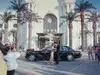
This logic is compellingly captured in her debut feature documentary Two Mountains Weighing Down My Chest (2026), shown at IDFA 2026 as part of Best of Fests, where Li bounces between her traditional family in Beijing, the ultra-permissive Berlin queer scene, and New York. “Each of those places is a room I enter, learning its rules and routines before moving on to another,” she shares, noting that “freedom comes from being able to move between the rooms without judging them and just letting life be” in all its absurdity, hilarity, and sadness. “However, there is also a danger in remaining in one room for too long,” Li observes. Whether one is “locked in a room” of a single identity or nationalism, or stuck in a particular mode of making films “with no chance of failing,” it creates rigidity in thinking and feeling that can harm creativity.
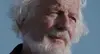
A representative of the Baltic tradition of poetic documentary, Lithuanian filmmaker Audrius Stonys—Woman and the Glacier (2016), screened at IDFA 2016, Bridges of Time (2018), screened at IDFA 2018—has often turned to what one dubs “the intimate tools of image and sound” in his work. His “complicated relationship with words” stems in part from his wariness of verbal language in films, inherited from the propagandistic Soviet era. In a system sustained by so many falsehoods and untruths, “words became the most vulnerable part of a film,” he recalls, “and little by little, you developed the ability to say everything without words.”
Audrius Stonys“Only documentaries can stop the world from being eaten by time.”
For Stonys, documentary constantly evolves as an art form and a way of remaining connected to life, which ultimately allows us to peer deeper into human nature across histories and geographies. If filmmaking is a gesture of persistence, he reflects, it might be as simple—and as difficult—to keep filming to capture the vanishing worlds, lives, and landscapes. “Life itself has value. It should be saved from disappearing, and only documentaries can stop the world from being eaten by time,” Stonys adds. As a filmmaker who has worked principally in short and medium-length formats, partly due to the production reality of the post-independence period in Lithuania, he recognizes that “even 10 minutes of concentrated expression on screen can be enormous.” “Maybe we just need to take the camera and film,” he concludes.
As political and production realities tighten in different countries, filmmaking as an exercise of creative freedom becomes an increasingly contested space for artists forced to navigate the tensions and forces that intrude on their work. Often arising from necessity, whether political or production-related, experimentation is, for some, part of a committed practice that upends and reimagines the documentary form, conceiving new ways of seeing and engaging with the world.
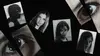

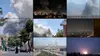



Chronicles of the Absurd (2024) by Miguel Coyula
This editorial was published in the IDFA 2026 Program Guide.
See the full Program Guide here.
[Header image: Two Mountains Weighing Down My Chest (2026) by Viv Li]